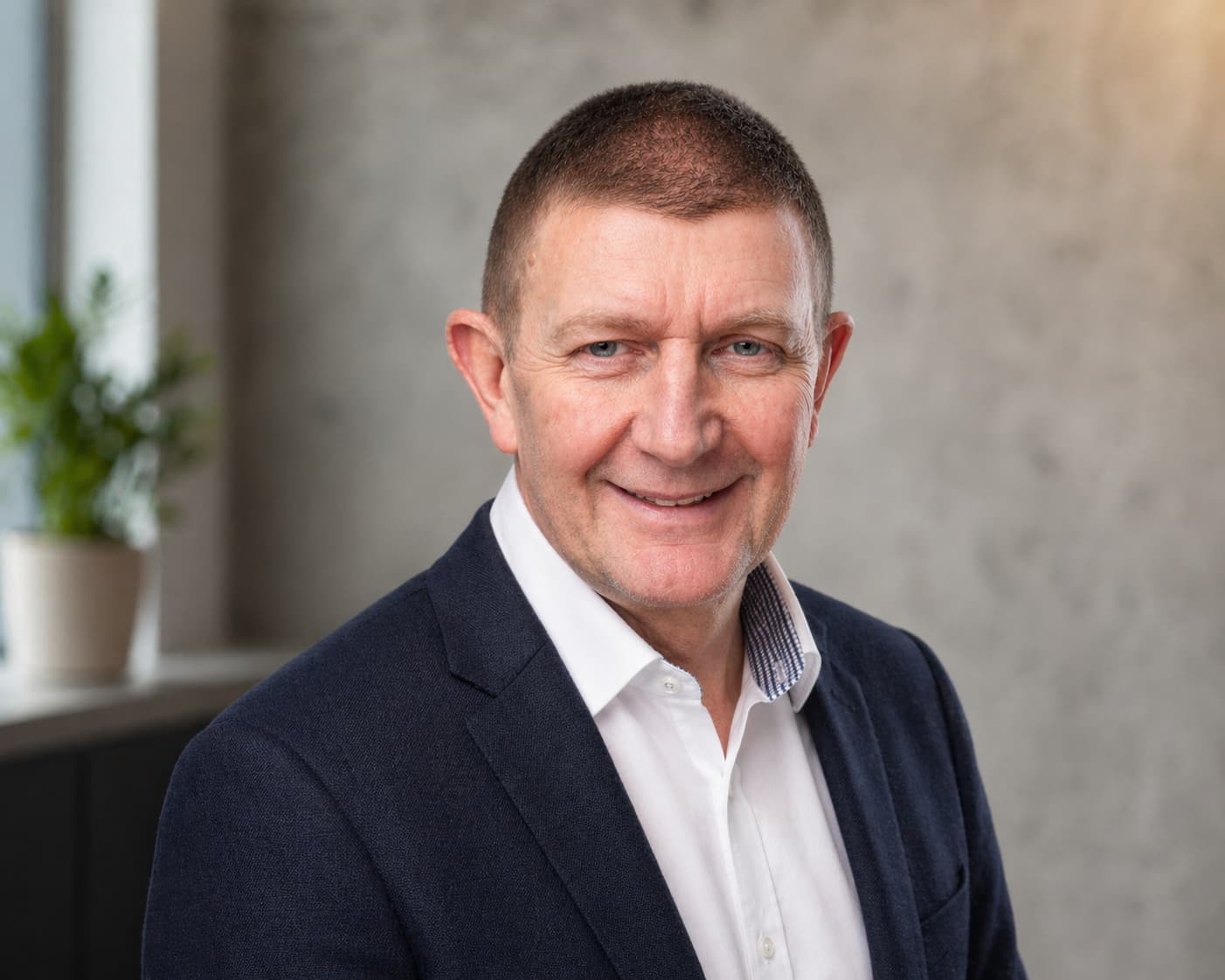
Founder of The Portal People. I build connected B2B systems
for manufacturers, distributors and wholesalers whose businesses depend on
accurate pricing, ordering, account visibility and reliable integration with
the systems they already use.
1986First day in technology
38Years of IT depth
42Team built in Mauritius
4th YearBuilding The Portal People platforms clients rely on daily
Work
The same instinct. different systems.
Connected B2B platforms for manufacturers, distributors and wholesalers.
We integrate the back-office systems clients already rely on with
customer-facing ordering, account visibility, pricing and workflows
that hold up in real business conditions.
Thirty-eight years in IT: hardware, networks, business software, and integration architecture.
A decade spent running operational teams in Egypt and Mauritius before The Portal People existed.
Now into our fourth year, with platforms clients continue to rely on every day.
Most of the businesses we work with are privately owned UK SMEs. They do not have
the luxury of treating systems as experiments. Decisions affect real cashflow, real
people, and often the owner directly. The work is usually about helping those
businesses use their systems properly so they can compete without
enterprise-scale budgets.
Capability
Account intelligence, not just a portal.
One client has run the entirety of their turnover through the platform since 2018.
That isn't really a case study. It's what happens when a platform becomes part
of how a business actually runs.
The Portal People grew out of that earlier work. We connect the systems clients
already depend on to customer-facing B2B platforms, including legacy platforms,
modular business software and modern API-ready systems.
The work has to hold up every day: pricing, ordering, account visibility,
workflows and the operational details that sit close to revenue.
Approach
Clarity before complexity.
I don't start with a specification for the sake of it. We start by understanding
where the friction actually sits in the business: accounts, warehouse, sales desk,
integrations, customer experience. Between my technical director and me, we've seen
enough versions of these problems that it rarely takes long to identify what really
needs doing.
Principle
Helpful before impressive.
Part of good systems work is helping people understand what they need to move
forward. That means explaining difficult things clearly, sharing what experience
has taught, and making sure clients can see what's happening in their own
platform without needing to ask. That practical teaching sits alongside the integration work.
It's part of the same job.
Facilitation
Difficult questions, clearly explained.
I work well with owners and leadership teams making technology decisions with
real commercial consequences. That includes where orders leak out of
account-managed manufacturing, distribution, and wholesale businesses, when to
integrate around existing systems rather than replace them, and what practical
AI adoption inside a B2B workflow actually looks like.
I'm interested in AI, but not as a shiny new object. For me, the useful question
is commercial: does it help a business capture missed revenue, reduce manual
work, improve customer service, or make better use of the systems and data it
already has?
That's where I see the value: AI assistants that support sales teams, help
customers place orders, turn emails or voice messages into useful workflows,
and surface the kind of account insight that would otherwise stay buried.
Part of that work now includes early development around agent-supported ordering,
email-to-order and voice-to-order workflows. These sit on top of existing
business software and are introduced carefully, where they improve commercial
outcomes rather than creating novelty for its own sake.
The conversations are direct, grounded in how businesses actually operate, and
favour honest questioning over theatre and slide decks.
Fillette was the mother. Ted and Barney were brothers from the same litter. Two gone, not forgotten. One still here, still excellent.
Fillette
Ted
Barney, still with us
Story
A simple life, a deep skill set.
I started in old-school IT: hardware, networks, Unix, the kind of field engineering
that teaches patience and realism fast. Sixty thousand miles a year, soldering serial
leads in the back of vans. Later came NetWare, business software, and early B2B eCommerce
integrations for manufacturers, distributors, and wholesalers.
After my father died and my mother became unwell, I stepped back from full-time IT
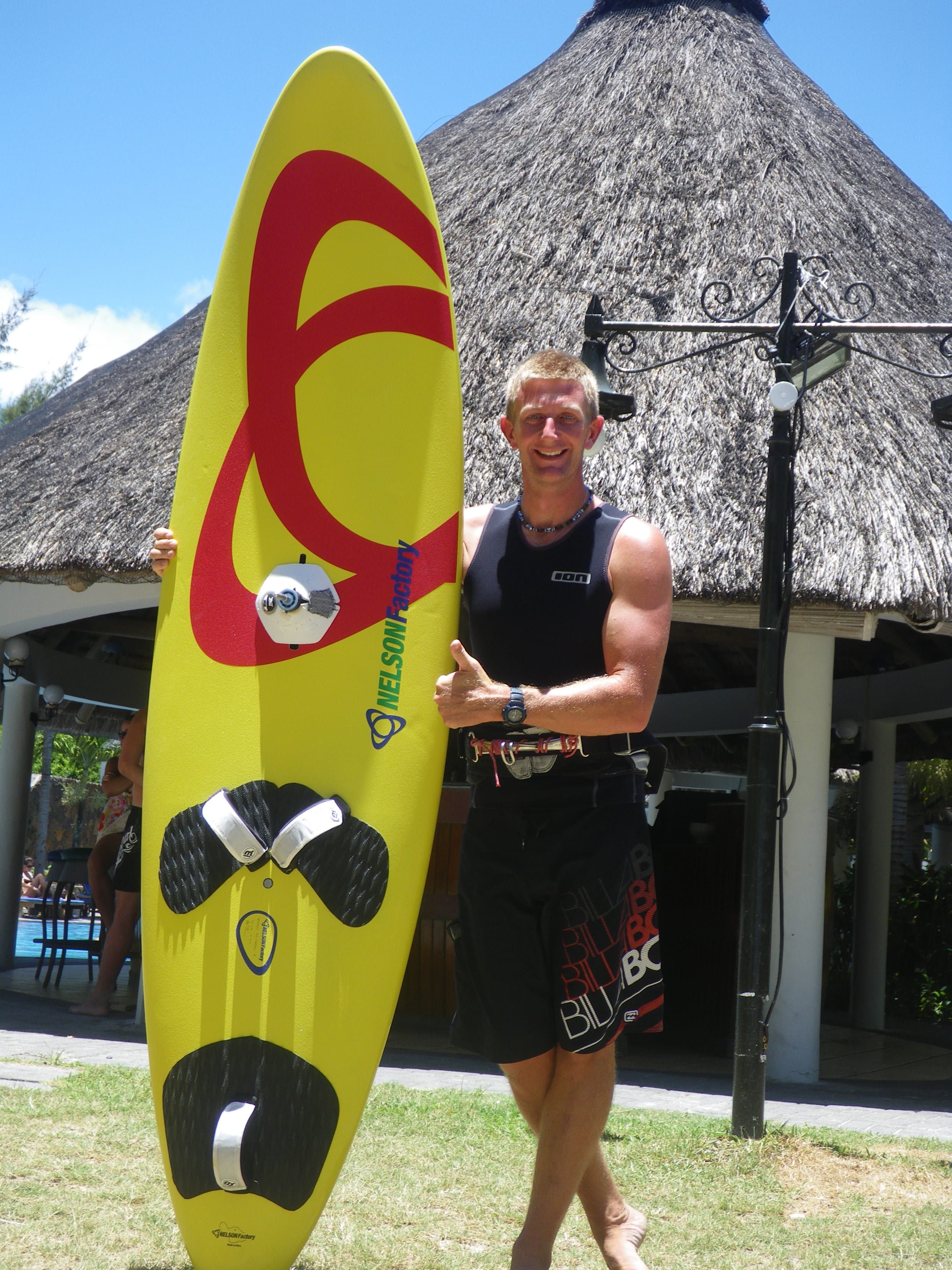
for a period. Once she recovered, a six-month posting as a windsurfing instructor
in Egypt became something larger than expected. It meant managing
students at every level, building structured progression under pressure, and learning
to read people quickly enough to deliver consistent results when conditions shifted.
I went back in 2006 to run the operation properly. Equipment imports, customs, local
licensing, tour operator contracts and targets set from Germany, repair workshops,
staff scheduling, accounts, bookings: the full operational load of a foreign business
in a developing country, behind a front designed to feel effortless. If guests felt
you were on holiday alongside them, everything was working. The centre built the
highest lesson turnover in the German owner's group. Clients returned. Some three
times a year. The standards and environment the team built together gave good people a
foundation to grow into. One of the instructors earned his VDWS qualification through
his own effort and commitment. After the revolution, he and his brother took over the
centre. They earned that in practice through the work they put in.
Mauritius followed. I arrived to run a water sports operation for the same German
ownership group, with nine staff and one centre. I left with forty-two staff, four service
points, and a restaurant I had never planned to build. By the time I left, the
operation had grown substantially. None of that happened on its own. Owners trusted
me with real responsibility, and the team did the hard work that turned growth into
reality.
I've always tended to work on systems and operations as if they were my own
responsibility, because that's usually how they affect the business. That builds
strong long-term relationships, but it also means being honest early when
something needs fixing.
If something does not go to plan, the priority is to stabilise the outcome first.
In account-managed B2B businesses, continuity matters. The instinct is to sit with
the owner or project lead, understand what happened, and agree what needs fixing,
not to apportion blame.
The Portal People grew out of the same way I've always worked with systems and teams.
Several of the businesses I worked with overseas later trusted us again when it
came time to build their platforms properly.
The Portal People began as a spin-out opportunity supported by the Baker family at
Chalvington. Mel Baker, who first gave me my start in IT as a work-experience
placement in 1986, has been part of the story from the beginning.
Water
The ocean keeps the work honest.
Mauritius, c.2009Forward loop. The move took some training to land. Some things do.
High waterThe moment before the drop. Good decisions feel exactly like this.
In the airYou commit to the line before you can see the landing.
Somewhere fastHeight is a side effect of speed and commitment. Applies everywhere.
The waterThis is why the work matters.
Out thereNo agenda. No calls. Just the read.
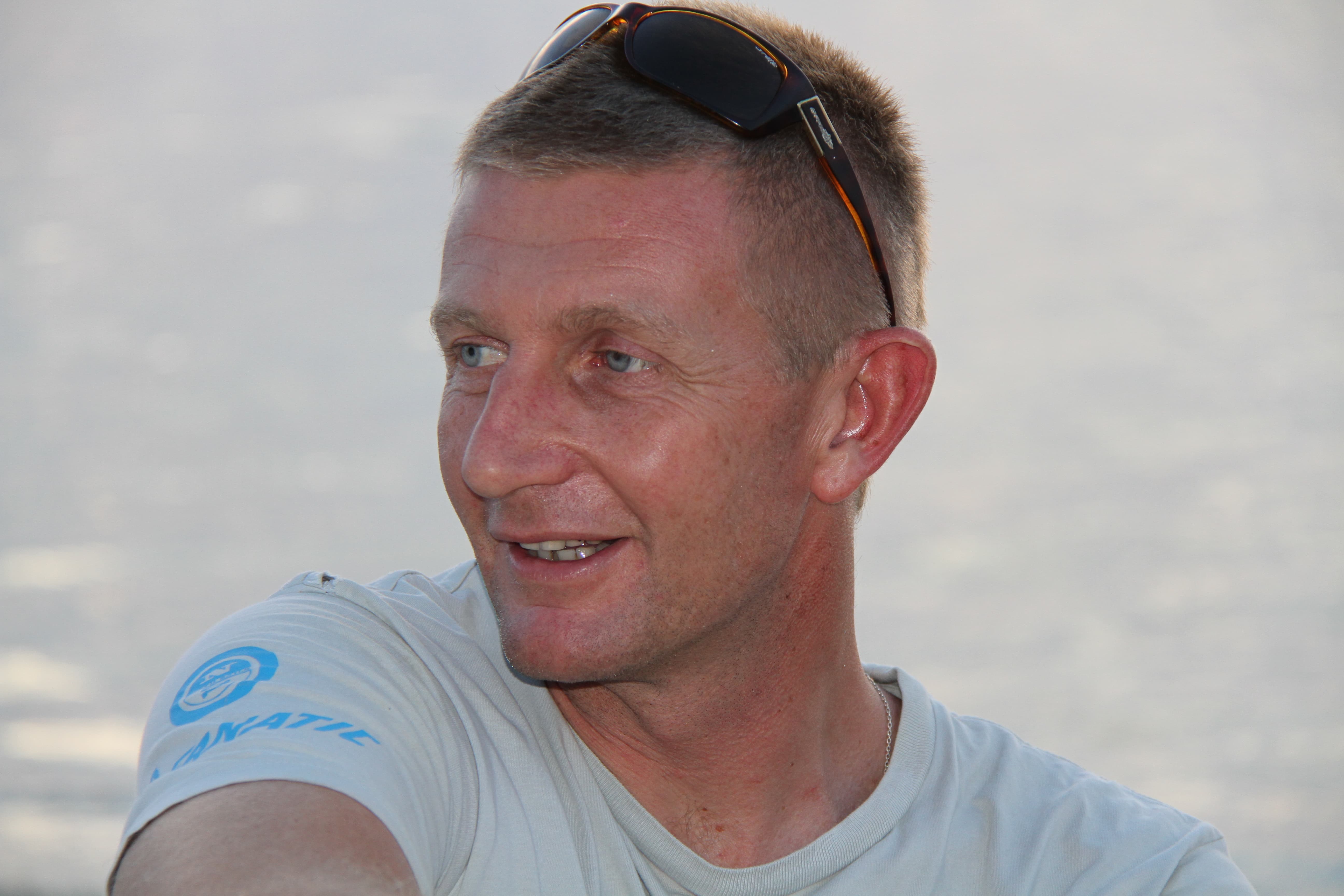
Filed under: reasons to keep buildingThe face of a man with a plan. Sort of.
"The hours on the water are not time off from the work. They are the part of the
thinking that the office doesn't reach. There are things you notice out there
about pace, about people, and about what actually matters that you don't notice
from a desk."
Fit
I work best with
Manufacturers, distributors and wholesalers with ERP or back-office
systems that need to connect properly to customer-facing platforms — with pricing,
ordering, account visibility, invoices and workflows that reflect how the business
actually operates.
Owners and leadership teams deciding whether to integrate around existing
systems or replace them, and who need someone who understands both the technical and
commercial sides of that decision before the conversation begins.
Operators trying to understand where orders leak out of
account-managed businesses, what that costs, and what a properly connected
platform would actually change.
Businesses that want clarity before committing to technical
change. Not a proposal, not a pitch. A considered conversation with
someone who has done it.
Businesses exploring AI or automation who want to understand
whether there is a clear commercial case — not just a new capability. The
question is always whether it reduces manual work, improves customer service,
or helps capture revenue that would otherwise be missed.
Probably not the right fit
Businesses looking for a quick gimmick, a generic brochure website, or
technology for its own sake.
Projects where the priority is impressive presentation rather than how
the business actually runs.
Businesses interested in AI or automation without a clear commercial
reason to use it.
Connect
Good work usually starts with
the right conversation.
If your ERP or back-office systems hold pricing, order history, invoices or account
information your customers cannot currently access, start with a conversation.
If you're navigating a technology decision and need someone who understands the
business before touching the systems, start there too.